पोस्ट को हिंदी में पढ़ने के लिए यहाँ क्लिक करें।
The Annasaheb Patil Loan Scheme 2024, launched by the Annasaheb Patil Economic Development Corporation (APEDC), is a significant initiative aimed at providing financial assistance in the form of loans to economically disadvantaged citizens and unemployed youth of Maharashtra. This scheme offers a loan ranging from ₹10 lakh to ₹50 lakh, enabling financially unstable individuals to start or expand their businesses, thereby generating employment opportunities for others.
This scheme is crucial in uplifting the socio-economic status of individuals by making them self-reliant. If you are a resident of Maharashtra and seeking financial assistance to pursue your entrepreneurial dreams, the Annasaheb Patil Loan Scheme might be the ideal solution for you. Below is an in-depth explanation of the scheme’s features, benefits, eligibility, and application process.
Objectives of the Annasaheb Patil Loan Scheme 2024
The primary objective of the Annasaheb Patil Loan Scheme 2024 is to provide financial assistance to economically weaker citizens of Maharashtra. By offering loans, the scheme aims to empower unemployed individuals, especially youth, enabling them to start or expand their businesses without facing financial hardships. This initiative not only promotes self-reliance but also fosters job creation in the state. Successful applicants will be provided loans with a tenure of 5 years, within which they must repay the loan.
This scheme is a part of the government’s broader vision of enhancing economic development by supporting entrepreneurs, thereby improving livelihoods and boosting local economies.
Key Features
- Loan Amount: Loans ranging from ₹10 lakh to ₹50 lakh will be provided.
- Repayment Period: Applicants have a tenure of 5 years to repay the loan.
- Target Group: The scheme focuses on the financially unstable and unemployed residents of Maharashtra.
- Objective: Promote entrepreneurship and self-reliance by providing financial support.
- Direct Benefit Transfer (DBT): The loan amount will be directly transferred to the applicant’s bank account.
Detailed Overview of Annasaheb Patil Loan Scheme 2024
| Feature | Details |
|---|---|
| Scheme Name | Annasaheb Patil Loan Scheme |
| Launched By | Annasaheb Patil Economic Development Corporation (APEDC) |
| State | Maharashtra |
| Beneficiaries | Permanent residents of Maharashtra |
| Loan Amount | ₹10 lakh to ₹50 lakh |
| Loan Tenure | 5 years |
| Objective | Provide loans to financially unstable citizens to promote entrepreneurship |
| Target Group | Unemployed youth and financially weak citizens |
| Application Mode | Online through Udyog Mahaswayam Portal |
| Eligibility Criteria | – Permanent resident of Maharashtra – Age limit: Male: 50 years, Female: 55 years – Economically weak individuals |
| Loan Types Available | – Personal Loan Interest Repayment Plan – Group Loan Interest Repayment Scheme – Group Project Loan Scheme |
| Documents Required | – Aadhar Card – Email ID – Mobile Number – Electricity Bill – Address Proof – PAN Card |
| Official Website | Udyog Mahaswayam Portal |
| Helpline Number | 1800-120-8040 |
| Repayment Plan | Repayment over 5 years |
| Loan Disbursement | Directly into applicant’s bank account through DBT |
| Application Process | 1. Visit Udyog Mahaswayam website 2. Register by entering details 3. Verify with OTP 4. Submit form after completing other details |
Types of Loans Available Under the Scheme
The scheme offers various types of loans to cater to the different needs of applicants. The loans offered under the Annasaheb Patil Loan Scheme are as follows:
- Personal Loan Interest Repayment Plan: Suitable for individuals who need financial assistance to start a personal venture.
- Group Loan Interest Repayment Scheme: Designed for groups of individuals starting a joint business.
- Group Project Loan Scheme: For larger projects initiated by a group of people working together.
These different types of loans ensure that the scheme caters to a wide variety of business models and needs, promoting both individual and collective entrepreneurship.
Eligibility Criteria for the Annasaheb Patil Loan Scheme 2024
To avail of the benefits under the scheme, applicants must meet the following eligibility criteria:
- Permanent Resident: The applicant must be a permanent resident of Maharashtra.
- Age Limit: The maximum age limit for male applicants is 50 years, while for female applicants, it is 55 years.
- Financially Unstable: The scheme is targeted at financially weaker sections who need support to start their businesses.
- Unemployed Citizens: Priority is given to those who are unemployed and looking for financial assistance to start a business.
By meeting these eligibility criteria, the scheme ensures that the loans are granted to deserving individuals who genuinely need financial assistance.
Also Read: ladki bahin maharashtra gov in 2024: Registration and Login Official Website- How To Apply
Documents Required for Application
Applicants must provide the following documents while applying for the Annasaheb Patil Loan Scheme:
- Aadhaar Card: Proof of identity.
- Email ID: For correspondence and communication.
- Mobile Number: To receive important notifications and OTPs.
- Electricity Bill: As proof of address.
- Address Proof: Any valid document showing the applicant’s residential address.
- PAN Card: For tax and financial identification.
These documents are essential for verifying the identity and eligibility of the applicant.
Benefits of the Annasaheb Patil Loan Scheme 2024
The Annasaheb Patil Loan Scheme provides several benefits to the residents of Maharashtra, including:
- Financial Assistance: Loans ranging from ₹10 lakh to ₹50 lakh will be provided to eligible applicants.
- Employment Generation: By supporting individuals in starting their businesses, the scheme indirectly creates more job opportunities for others.
- Direct Transfer to Bank Account: The loan amount will be directly transferred to the applicant’s bank account through the Direct Benefit Transfer (DBT) system, ensuring transparency.
- Five-Year Repayment Period: The scheme provides a flexible repayment tenure of five years, giving ample time to the applicants to repay the loan.
- Business Growth: The scheme encourages entrepreneurship, helping people to start or expand their business ventures.
These benefits make the Annasaheb Patil Loan Scheme a strong enabler of economic development for Maharashtra’s citizens.
Step-by-Step Application Process for the Annasaheb Patil Loan Scheme
The application process for the Annasaheb Patil Loan Scheme is simple and can be done online through the Udyog Mahaswayam Portal. Follow these steps to apply for the scheme:
Step 1: Visit the Official Website
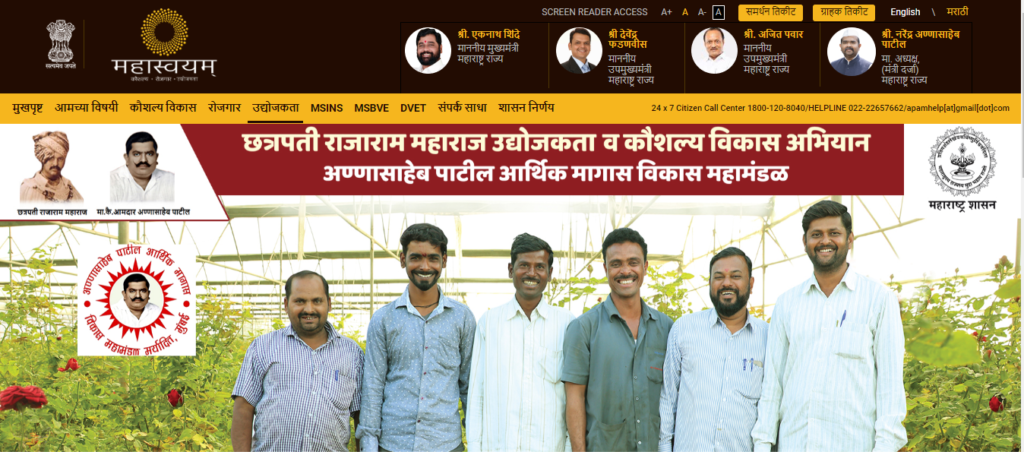
- Go to the official Udyog Mahaswayam Portal.
- On the homepage, click on the Register Now option.
Step 2: Registration Form
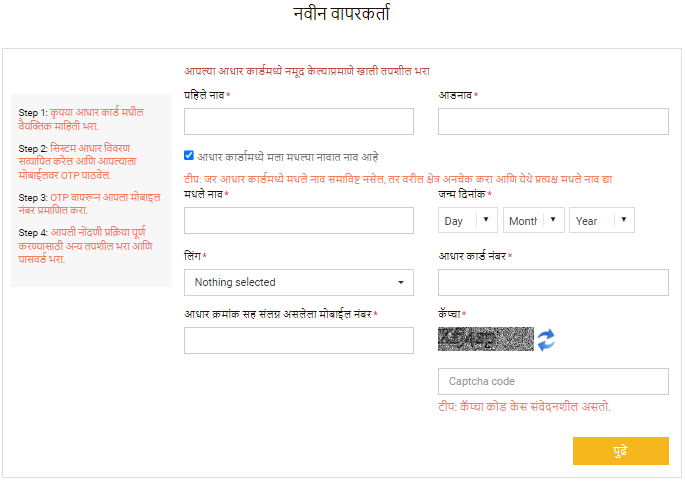
- A registration form will appear on your screen.
- Enter your details such as name, date of birth, gender, Aadhaar number, and registered mobile number.
- Click Next to proceed.
Step 3: OTP Verification
- After clicking Next, you will receive an OTP on your registered mobile number.
- Enter the OTP to verify your details.
Step 4: Complete the Application
- After OTP verification, you will need to fill in other necessary details.
- Once all the details are filled out correctly, click on Submit.
Step 5: Application Submission
- After submission, your application will be processed by the authorities.
- You will receive a confirmation message upon successful submission.
Step 6: Track Application Status
Applicants can track the status of their application on the Udyog Mahaswayam portal by logging in with their registered credentials.
Contact Information
For any queries or issues related to the Annasaheb Patil Loan Scheme, applicants can reach out to the following helpline:
Helpline Number: 1800-120-8040
Frequently Asked Questions (FAQs)
1. Who is eligible to apply for the Annasaheb Patil Loan Scheme?
All permanent residents of Maharashtra are eligible to apply for the Annasaheb Patil Loan Scheme, provided they meet the age and financial criteria outlined in the scheme’s guidelines.
2. What is the maximum loan amount under the Annasaheb Patil Loan Scheme?
The maximum loan amount that can be availed under the scheme is ₹50 lakh, while the minimum amount is ₹10 lakh.
3. What is the tenure for loan repayment?
The loan repayment tenure under the Annasaheb Patil Loan Scheme is 5 years.
4. What documents are required for applying to the scheme?
Applicants need to provide their Aadhaar card, PAN card, proof of address, mobile number, email ID, and electricity bill for verification.
5. Can women apply for the scheme?
Yes, women can apply for the scheme. The age limit for female applicants is 55 years.
6. How do I apply for the Annasaheb Patil Loan Scheme?
You can apply for the Annasaheb Patil Loan Scheme by visiting the Udyog Mahaswayam portal and filling out the application form online.
7. Is there any interest on the loan provided under the scheme?
The scheme offers loans at a concessional interest rate, making it easier for applicants to repay the amount.
8. What is the main objective of the Annasaheb Patil Loan Scheme?
The primary objective of the scheme is to support financially unstable individuals and unemployed youth in Maharashtra by providing financial assistance to start their businesses.
9. Will the loan amount be transferred directly to the applicant’s account?
Yes, the loan amount will be transferred directly to the applicant’s bank account through the Direct Benefit Transfer (DBT) system.
10. How can I check the status of my application?
You can check the status of your application by logging into the Udyog Mahaswayam portal using your registered credentials.
By understanding the Annasaheb Patil Loan Scheme’s benefits and application process, you can make an informed decision about applying for financial assistance. The scheme provides a great opportunity for aspiring entrepreneurs to fulfill their business goals and contribute to the economic growth of Maharashtra.
Conclusion
The Annasaheb Patil Loan Scheme 2024 is a vital initiative for the economic upliftment of Maharashtra’s financially weaker citizens, especially unemployed youth. By offering loans ranging from ₹10 lakh to ₹50 lakh, the scheme enables individuals to start or expand their businesses, thereby creating more employment opportunities and promoting entrepreneurship in the state. With a generous repayment period of five years and a transparent application process through the Udyog Mahaswayam portal, the scheme ensures that deserving candidates receive the financial support they need.
The eligibility criteria are designed to target the most vulnerable sections of society, making it easier for them to access financial aid without the usual hurdles. Additionally, the loan amount being directly transferred to the applicant’s bank account under the Direct Benefit Transfer (DBT) system ensures transparency and reduces delays. The initiative not only contributes to personal growth but also plays a significant role in the overall economic development of Maharashtra by fostering self-reliance and job creation.
For individuals looking to take control of their financial future, the Annasaheb Patil Loan Scheme is a golden opportunity to turn business ideas into reality. By following the simple application steps and meeting the eligibility criteria, applicants can secure the necessary financial assistance to pave the way for a brighter future. Whether you’re an aspiring entrepreneur or looking to expand an existing business, this scheme offers the support you need to thrive.
If you are eligible, don’t miss the chance to apply and take full advantage of this empowering opportunity.
Post In Hindi
अण्णासाहेब पाटिल लोन योजना जानकारी 2024: पात्रता, लाभ और आवेदन प्रक्रिया
अण्णासाहेब पाटिल आर्थिक विकास निगम (APEDC) ने अण्णासाहेब पाटिल लोन योजना 2024 की शुरुआत की है। महाराष्ट्र राज्य के आर्थिक रूप से अस्थिर नागरिकों को वित्तीय सहायता प्रदान करने के उद्देश्य से, APEDC ने इस योजना को शुरू किया है। इस योजना के तहत आर्थिक रूप से कमजोर नागरिकों और बेरोजगार युवाओं को वित्तीय ऋण प्रदान किया जाएगा ताकि वे अपने व्यवसाय की शुरुआत कर सकें और उन्हें आर्थिक समस्याओं की चिंता ना हो। अण्णासाहेब पाटिल लोन योजना 2024 के तहत ऋण की राशि ₹10 लाख से लेकर ₹50 लाख तक होगी। इस योजना का लाभ महाराष्ट्र राज्य के सभी स्थायी निवासी उठा सकते हैं।
अण्णासाहेब पाटिल लोन योजना 2024 का उद्देश्य
इस योजना का मुख्य उद्देश्य महाराष्ट्र राज्य के आर्थिक रूप से अस्थिर नागरिकों को ऋण प्रदान कर उनकी मदद करना है। इस योजना के माध्यम से बेरोजगार नागरिक अपना व्यवसाय शुरू कर सकते हैं या उसे बढ़ा सकते हैं, जिससे अन्य लोगों के लिए भी रोजगार के अवसर उत्पन्न होंगे। इस योजना के तहत वित्तीय सहायता प्राप्त करने वाले सभी आवेदकों को ऋण की राशि चुकाने के लिए 5 साल का समय मिलेगा। यह पहल व्यक्तियों, खासकर बेरोजगार युवाओं और आर्थिक रूप से कमजोर वर्गों को सशक्त बनाने के लिए है। इस योजना का लाभ उठाने के लिए पात्रता मापदंडों को पूरा करने वाले सभी आवेदकों को आधिकारिक वेबसाइट पर जाकर आवेदन पत्र भरना होगा।
अण्णासाहेब पाटिल लोन योजना का सारांश
| योजना का नाम | अण्णासाहेब पाटिल लोन योजना 2024 |
|---|---|
| शुरू करने वाला | अण्णासाहेब पाटिल आर्थिक विकास निगम (APEDC) |
| उद्देश्य | वित्तीय सहायता (ऋण) प्रदान करना |
| लाभार्थी | महाराष्ट्र के नागरिक |
| आधिकारिक वेबसाइट | उद्योग महास्वयम पोर्टल |
पात्रता मापदंड
- आवेदक महाराष्ट्र राज्य का नागरिक होना चाहिए।
- पुरुष आवेदकों के लिए अधिकतम आयु सीमा 50 वर्ष और महिला आवेदकों के लिए 55 वर्ष है।
योजना के तहत ऋण के प्रकार
- व्यक्तिगत ऋण ब्याज पुनर्भुगतान योजना
- समूह ऋण ब्याज पुनर्भुगतान योजना
- समूह परियोजना ऋण योजना
आवश्यक दस्तावेज़
- आधार कार्ड
- ईमेल आईडी
- मोबाइल नंबर
- बिजली का बिल
- पता प्रमाण पत्र
- पैन कार्ड
अण्णासाहेब पाटिल लोन योजना के लाभ
- वित्तीय सहायता: महाराष्ट्र राज्य के आर्थिक रूप से अस्थिर नागरिकों को ऋण के रूप में वित्तीय सहायता दी जाएगी।
- ऋण की राशि: इस योजना के तहत चयनित आवेदकों को ₹10 लाख से लेकर ₹50 लाख तक का ऋण प्रदान किया जाएगा।
- व्यवसाय की शुरुआत: योजना के तहत मिले ऋण से बेरोजगार नागरिक अपना व्यवसाय शुरू कर सकते हैं, जिससे अन्य लोगों को रोजगार के अवसर मिलेंगे।
- 5 साल की अवधि: अण्णासाहेब पाटिल लोन योजना के तहत आवेदकों को ऋण की राशि वापस करने के लिए 5 साल का समय मिलेगा।
- सीधे बैंक खाते में हस्तांतरण: चयनित आवेदकों की वित्तीय सहायता सीधे उनके बैंक खाते में हस्तांतरित की जाएगी।
अण्णासाहेब पाटिल लोन योजना आवेदन प्रक्रिया
चरण 1: जो भी आवेदक इस योजना के लिए आवेदन करना चाहते हैं, वे अब उद्योग महास्वयम की आधिकारिक वेबसाइट पर जाकर ऑनलाइन आवेदन पत्र भर सकते हैं।
चरण 2: आवेदक जब आधिकारिक वेबसाइट के मुख्य पृष्ठ पर पहुंचते हैं, तो उन्हें “Register Now” विकल्प पर क्लिक करना होता है।
चरण 3: एक नया पृष्ठ खुलेगा जहां आवेदक को अपने नाम, जन्म तिथि, लिंग, आधार कार्ड और पंजीकृत मोबाइल नंबर जैसी सभी जानकारी दर्ज करनी होगी।
चरण 4: सभी जानकारी सावधानीपूर्वक दर्ज करने के बाद, आवेदक को “Next” विकल्प पर क्लिक करना होगा।
चरण 5: जैसे ही आवेदक “Next” पर क्लिक करता है, उसे पंजीकृत मोबाइल नंबर पर एक ओटीपी प्राप्त होगा।
चरण 6: आवेदक को ओटीपी दर्ज करना होगा जो उसे उसके पंजीकृत मोबाइल नंबर पर प्राप्त हुआ है।
चरण 7: अब आवेदक को अन्य सभी विवरण दर्ज करने होंगे और अपना आवेदन जमा करने के लिए “Submit” विकल्प पर क्लिक करना होगा।
संपर्क जानकारी
फोन नंबर: 1800-120-8040
अक्सर पूछे जाने वाले प्रश्न (FAQs)
- अण्णासाहेब पाटिल लोन योजना का लाभ किसे मिलेगा?
- इस योजना का लाभ महाराष्ट्र राज्य के सभी स्थायी निवासी उठा सकते हैं। यह योजना विशेष रूप से आर्थिक रूप से कमजोर नागरिकों और बेरोजगार युवाओं के लिए है, जो अपना व्यवसाय शुरू करना चाहते हैं।
- अण्णासाहेब पाटिल लोन योजना के तहत ऋण की अवधि क्या है?
- इस योजना के तहत ऋण की अवधि 5 साल है, जिसमें आवेदक को ऋण की राशि चुकानी होगी।
- योजना के तहत आवेदकों को कितना ऋण मिलेगा?
- इस योजना के तहत चयनित आवेदकों को ₹10 लाख से लेकर ₹50 लाख तक का ऋण प्रदान किया जाएगा।
- इस योजना के लिए पात्रता मापदंड क्या हैं?
- आवेदक को महाराष्ट्र का स्थायी निवासी होना चाहिए। पुरुष आवेदकों की अधिकतम आयु 50 वर्ष और महिला आवेदकों की अधिकतम आयु 55 वर्ष है।
- अण्णासाहेब पाटिल लोन योजना का उद्देश्य क्या है?
- इस योजना का मुख्य उद्देश्य आर्थिक रूप से कमजोर नागरिकों और बेरोजगार युवाओं को ऋण प्रदान कर उन्हें सशक्त बनाना है ताकि वे अपना व्यवसाय शुरू कर सकें और अन्य लोगों के लिए रोजगार के अवसर उत्पन्न कर सकें।
- आवेदन करने के लिए कौन-कौन से दस्तावेज़ जरूरी हैं?
- आवेदन करने के लिए आधार कार्ड, ईमेल आईडी, मोबाइल नंबर, बिजली का बिल, पता प्रमाण पत्र और पैन कार्ड आवश्यक दस्तावेज़ हैं।
- ऋण की राशि का भुगतान कैसे किया जाएगा?
- ऋण की राशि सीधे चयनित आवेदकों के बैंक खाते में हस्तांतरित की जाएगी।
- योजना के लिए आवेदन कैसे किया जा सकता है?
- आवेदक योजना के लिए उद्योग महास्वयम पोर्टल की आधिकारिक वेबसाइट पर जाकर ऑनलाइन आवेदन कर सकते हैं। आवेदन प्रक्रिया के तहत आवेदकों को सभी जरूरी जानकारी और दस्तावेज़ जमा करने होंगे।
- अण्णासाहेब पाटिल लोन योजना के तहत ऋण के कौन-कौन से प्रकार हैं?
- इस योजना के तहत व्यक्तिगत ऋण ब्याज पुनर्भुगतान योजना, समूह ऋण ब्याज पुनर्भुगतान योजना और समूह परियोजना ऋण योजना जैसी विभिन्न प्रकार की ऋण योजनाएं उपलब्ध हैं।
- योजना के तहत आवेदन करने के बाद क्या होगा?
- आवेदन करने के बाद, आवेदकों को चयन प्रक्रिया का इंतजार करना होगा। चयनित आवेदकों को ऋण की राशि प्रदान की जाएगी और उन्हें इसे 5 साल की अवधि में वापस चुकाना होगा।
अण्णासाहेब पाटिल लोन योजना महाराष्ट्र के आर्थिक रूप से कमजोर नागरिकों के लिए एक महत्वपूर्ण पहल है, जो उन्हें व्यवसाय शुरू करने और रोजगार उत्पन्न करने में मदद करती है। यह योजना न केवल बेरोजगारों को आत्मनिर्भर बनने का अवसर देती है, बल्कि आर्थिक रूप से कमजोर वर्गों को सशक्त बनाने में भी महत्वपूर्ण भूमिका निभाती है।